
Schedule your complimentary consultation today and discover how the ABC method can create your confident smile. Dr. Chiggs will assess your needs and create a personalized treatment plan.
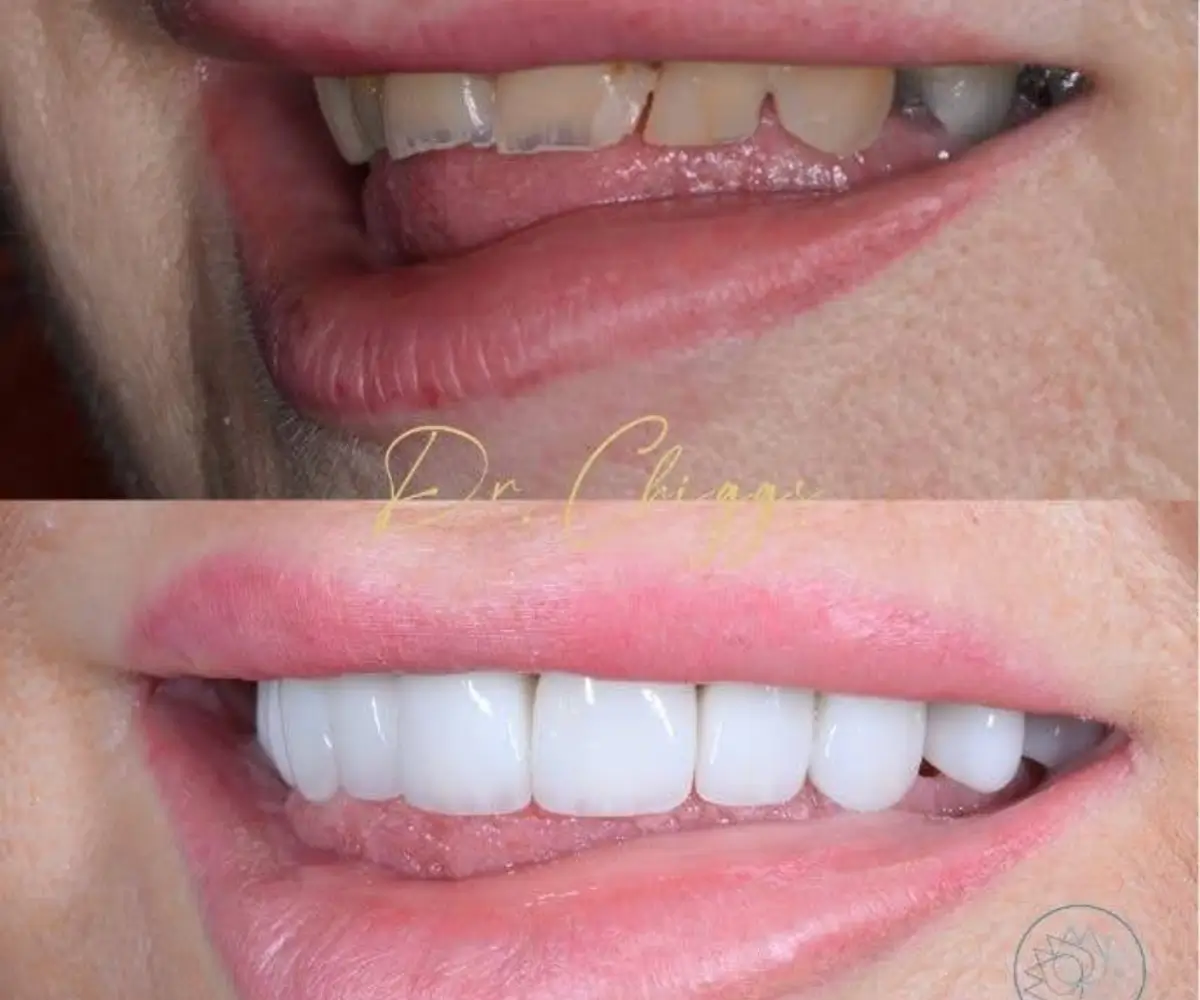
Porcelain veneers are thin, custom-made shells of durable ceramic material that are bonded to the front surfaces of your teeth to improve their appearance. They’re one of the most popular cosmetic dental treatments for achieving a whiter, straighter, more uniform smile.
They can transform teeth that are:
Because veneers cover only the front surface, they provide a natural, polished look while maintaining most of your original tooth structure.
Your dentist evaluates your smile and discusses your goals.
A custom 3D printed model is produced to allow you visualise your future smile. Sometimes we can transfer this into your mouth for in-face visualisation.
A small amount of enamel (usually <1 mm) is gently removed to make room for the veneers. If teeth are already damaged, zero preparation may be an option. You walk away with temporary teeth based on your future smile. You have time to adapt, and verify the result.
A dental lab creates custom veneers that match your desired shape and shade.
The final veneers are tried in. If happy, they are bonded with strong adhesives to your teeth.
Veneers can improve the appearance of:
They offer a long-lasting cosmetic solution for smile enhancement.
With proper care, porcelain veneers typically last 10–15 years, and sometimes even longer. They are highly durable and more stain-resistant than composite bonding.
Veneers require the removal of a small amount of enamel, making the treatment irreversible. Once enamel is removed, it cannot grow back. A common reason for replacement in the future is due to receding gum levels, which are a normal process of aging.
Absolutely. Porcelain veneers are designed to mimic natural tooth enamel in colour and translucency. They blend seamlessly with existing teeth for a natural, aesthetic result.
The treatment usually includes:
Treatment typically requires 2–3 appointments.
Most patients experience little to no discomfort. Local anaesthetic may be used during preparation, and any temporary sensitivity usually settles quickly.
Proper care helps protect your veneers and natural teeth.
Porcelain veneers can stain, however they are more stain resistant than composite bonding or natural teeth due to their highly glazed surface. Keeping up with good oral hygiene and examinations helps maintain brightness.
You may be a good candidate if you:
A consultation will determine your suitability.
The cost depends on the number of veneers, the complexity of the case, and the type of porcelain used. On average this is £895 per tooth.
Most patients choose veneers for the front 4–10 teeth—the ones most visible when smiling. Your dentist will help you choose based on your goals and smile line.
| Porcelain Veneers | Composite Bonding |
|---|---|
| Lasts 10–15+ years | Lasts 5–10 years |
| Highly stain-resistant | More prone to staining |
| Stronger and more durable | Less durable |
| More expensive | More affordable |
| Cannot be adjusted or repaired easily | Easy to adjust and repair |
| Usually requires enamel removal | Minimal or no enamel removal |
Veneers require minimal enamel reduction but do not damage the underlying tooth when done correctly. Maintaining cleanliness and hygiene is essential to prevent decay around veneers.
Yes. Old or worn veneers can be removed and replaced with new ones to refresh your smile and improve appearance.
Whitening treatments do not change the colour of porcelain. If you want a lighter shade, whiten your natural teeth before getting veneers, then match the veneers to your new shade.
Most patients return to normal activities immediately. You may experience mild sensitivity for a few days, especially to hot or cold foods.
While rare, veneers can chip or detach if exposed to excessive force. Your dentist can repair or reattach them. Avoid biting hard objects and wear a nightguard if you grind your teeth.
Veneers can improve the appearance of mildly crooked or crowded teeth, but severe misalignment may require orthodontics first.
Most patients complete the process in 2–3 visits over a few weeks.

Award-winning cosmetic dentist with advanced expertise in prosthodontics, dedicated to creating confident smiles in Birmingham through personalised, minimally invasive care.
Copyright © 2025 Dr. Chiggs. All Rights Reserved | Designed by Neomedia
